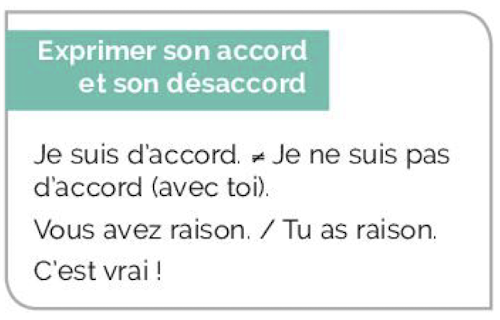
Situation 3: Exprimer son accord et don désaccord
Vocab Bank:
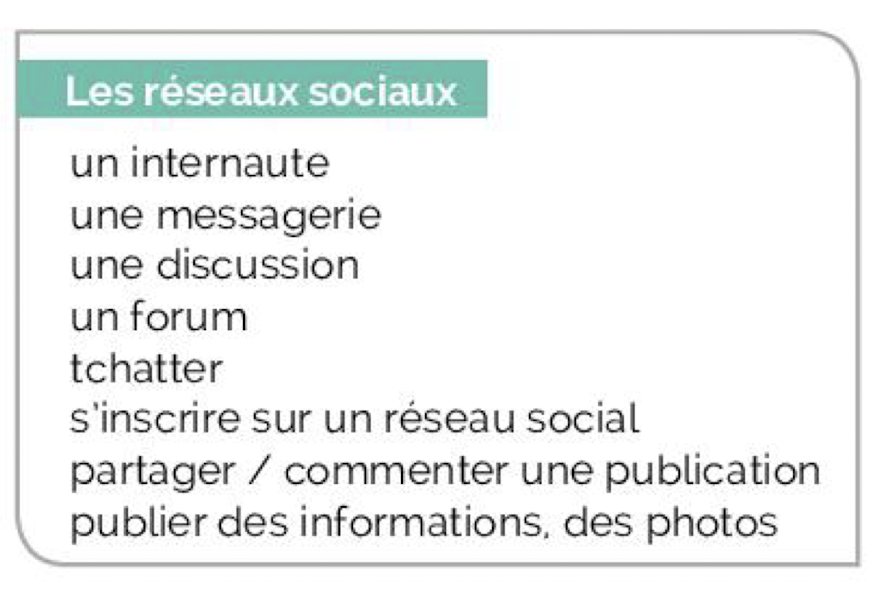
Les réseaux sociaux (Social media)
- un internaute : an internet user
- une messagerie : a messaging service
- Telegram ou WhatsApp par exemple
- une discussion : a discussion / conversation
- un forum : an online forum
- tchatter : to chat online
- parler en ligne
- s’inscrire sur un réseau social : to sign up for a social network
- partager une publication : to share a post
- commenter une publication : to comment on a post
- publier des informations, des photos : to post information, photos
Oui / OK
- je suis d’accord
- je ne suis pas d’accord
- bien sûr
- ça va
- ça (ne) va pas
- ça (ne) marche pas
- tu as raison
- vous avez raison
- tu as tort
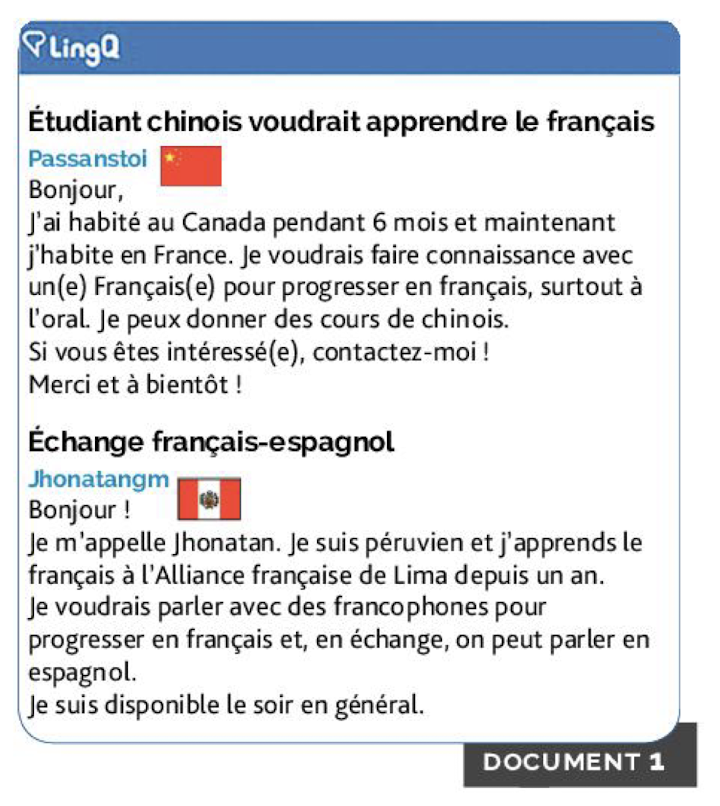
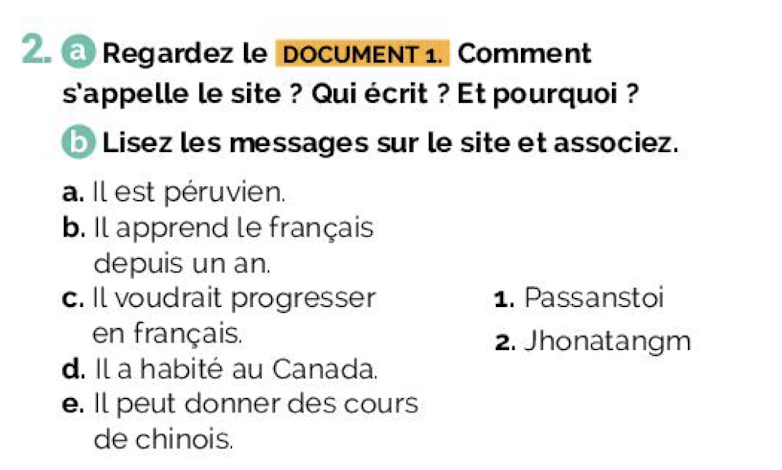
- le site s’appelle LingQ
- passanstoi et johnatangm écrivent
- passanstoi voudrait apprendre le français et jhonatangm voudrait faire un échange français-espagnol
a. J
b. J
c. P
d. P
e. P
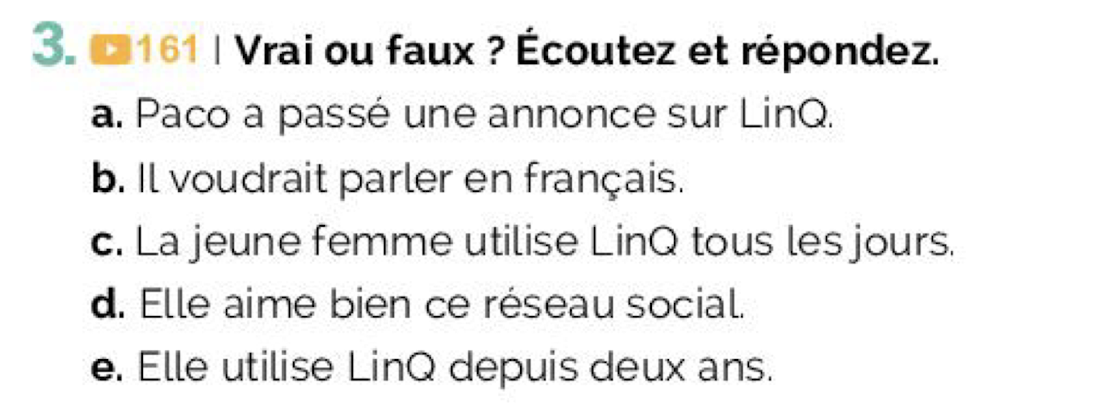
a. faux, pas encore
b. vrai
c. faux, elle utilise LingQ pendant le week-end
d. vrai
e. faux
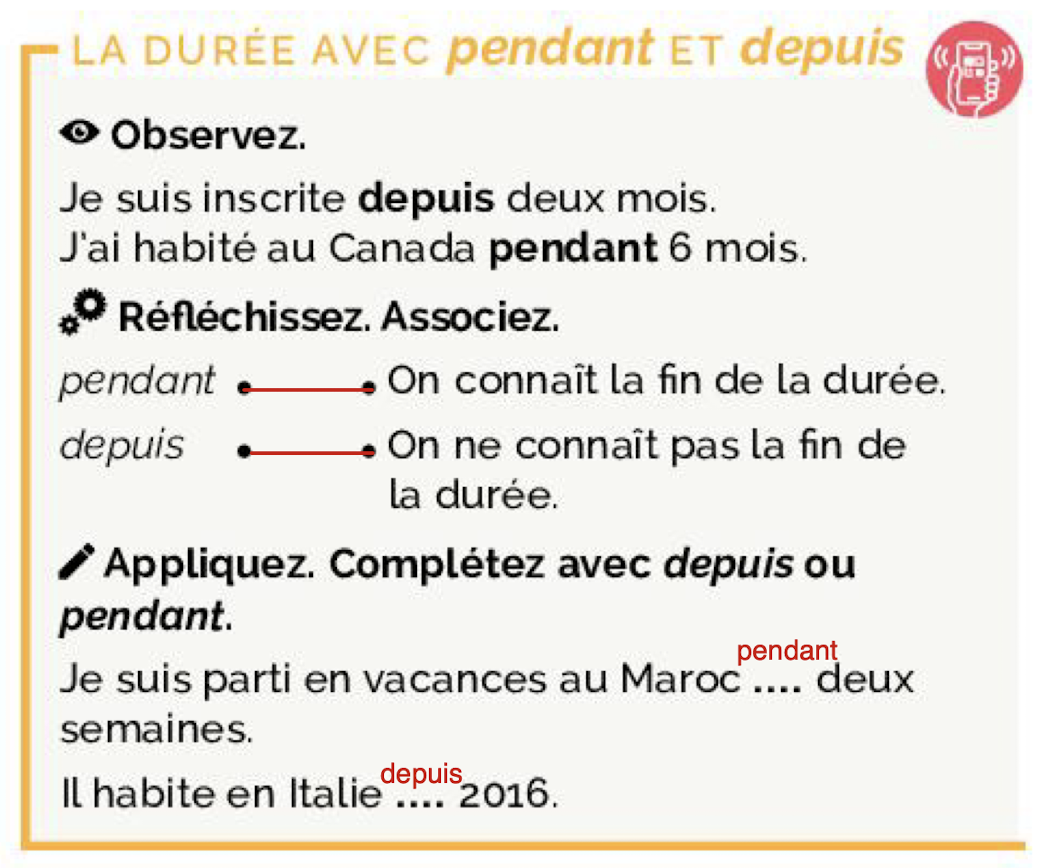
La Durée
| Expression | Closest English equivalent | Usage | Example |
|---|---|---|---|
| depuis + duration | for | Started in the past and still continues now. Use the present tense in French for this meaning. | J’étudie le français depuis deux ans. → I have been studying French for two years. |
| depuis + starting point | since | Gives the starting point of a situation that still continues now. Use the present tense in French for this meaning. | Il habite en Italie depuis 2016. → He has lived in Italy since 2016. |
| pendant + duration | for | Gives a bounded length of time. Use the passé composé for a completed past action; other tenses are possible. | J’ai habité au Canada pendant six mois. → I lived in Canada for six months. |
| pendant + event / period | during | Says when something happens within an event or period. | J’ai travaillé pendant les vacances. → I worked during the holidays. |
Compare the same activity:
- J’étudie le français depuis deux ans. → I’ve been studying French for two years; I still study it.
- J’ai étudié le français pendant deux ans. → I studied French for two years; that period is finished.
Pendant does not itself require the passé composé. It can also describe a future duration:
Je vais étudier pendant deux heures. → I’m going to study for two hours.
Memory aid: depuis = “since / for, continuing up to now” in these examples; pendant = “for a bounded period / during.”
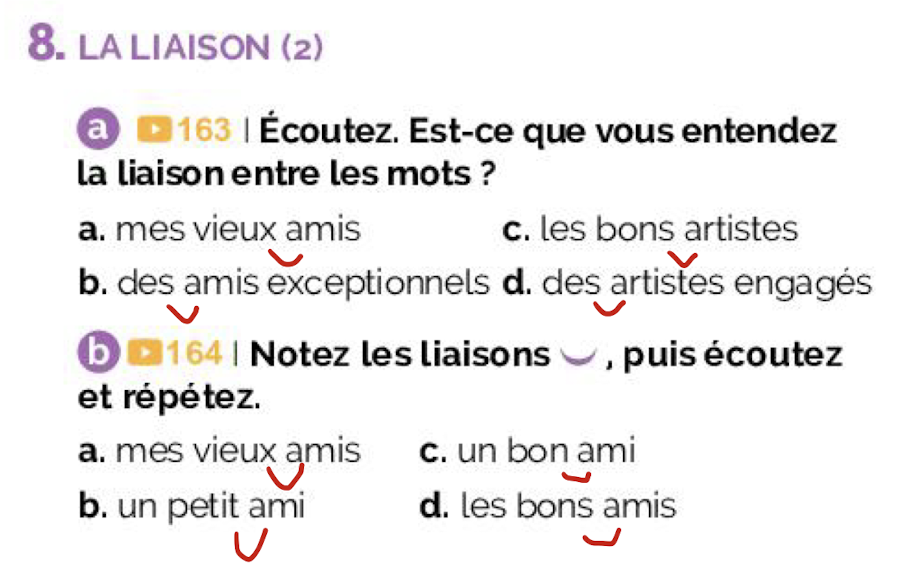
- Adjective before noun : make the liaison, e.g. vieux amis (z), petit ami (t), bon ami (n), bons artistes (z).
- Adjective after noun : generally no liaison between the noun and adjective in everyday speech, e.g. amis exceptionnels, artistes engagés.
- Determiner before noun : still make the liaison, e.g. des amis, des artistes (z).
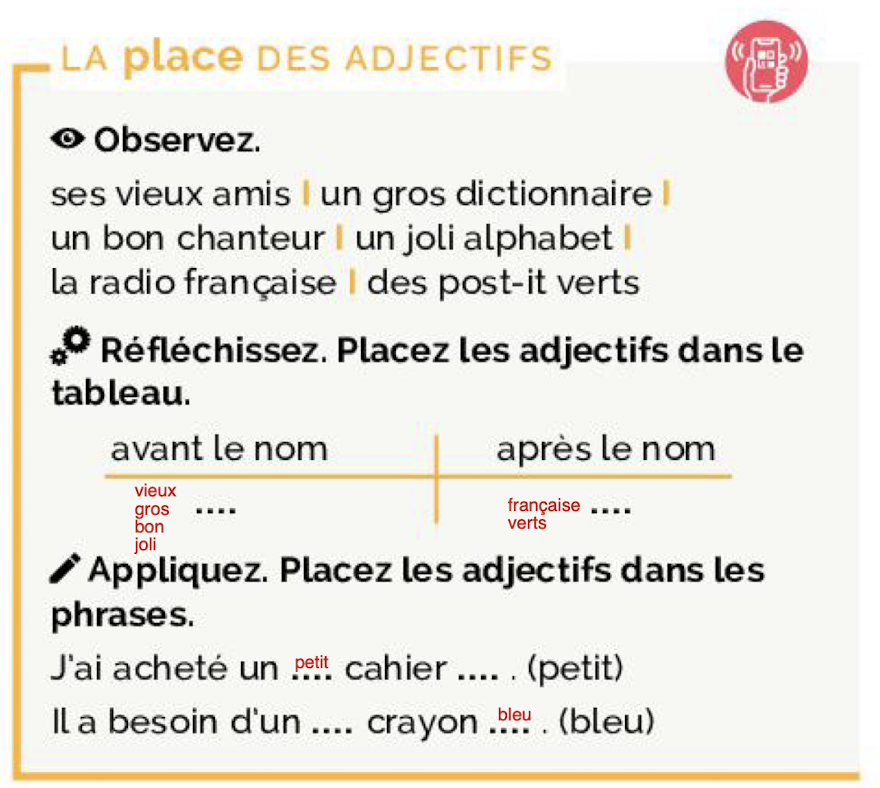
- Adjective order: see La Place des Adjectifs for before/after placement, BAGS, and changes of meaning. Original examples: L4: BAGS adjectives before the noun.