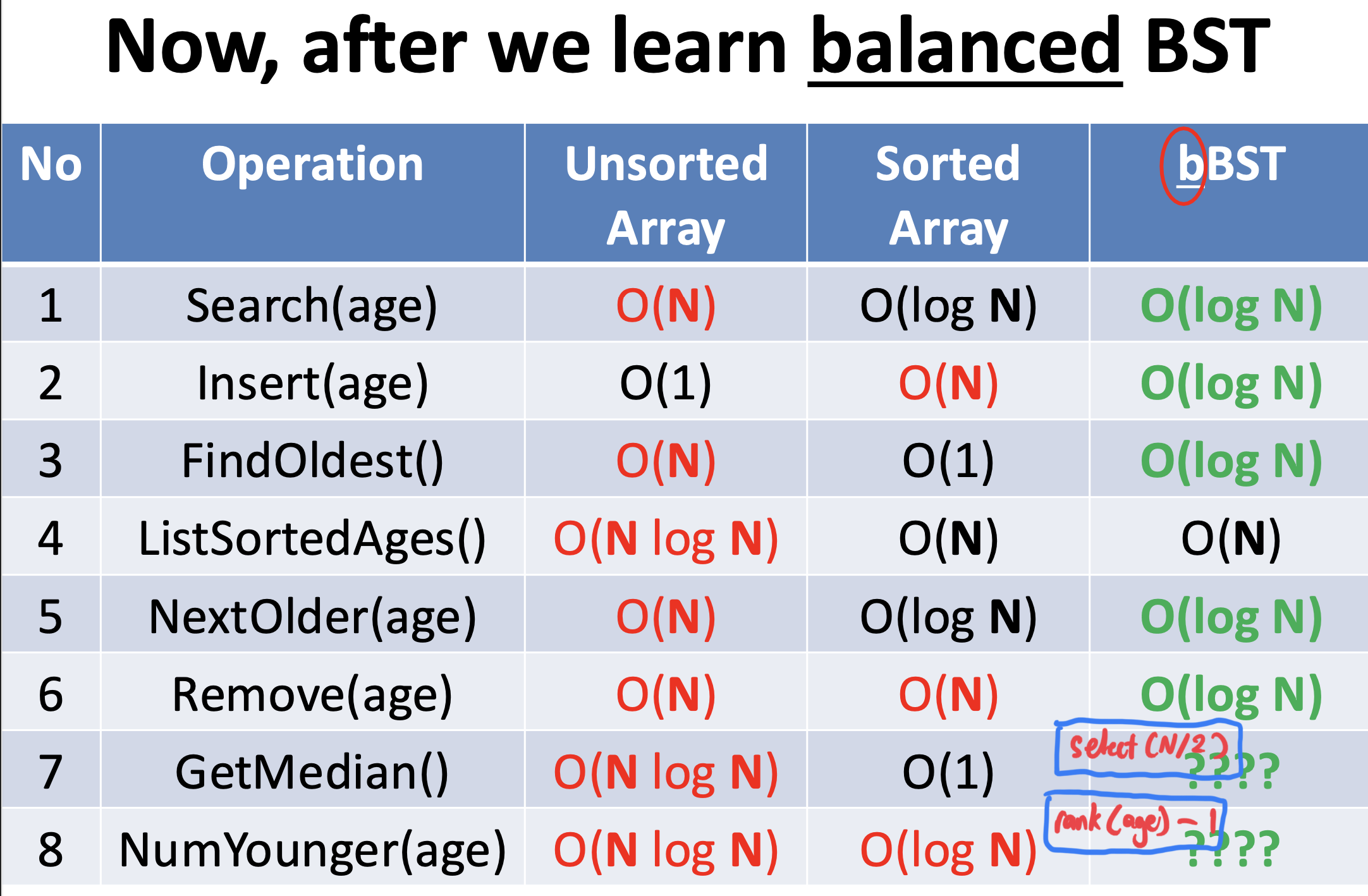
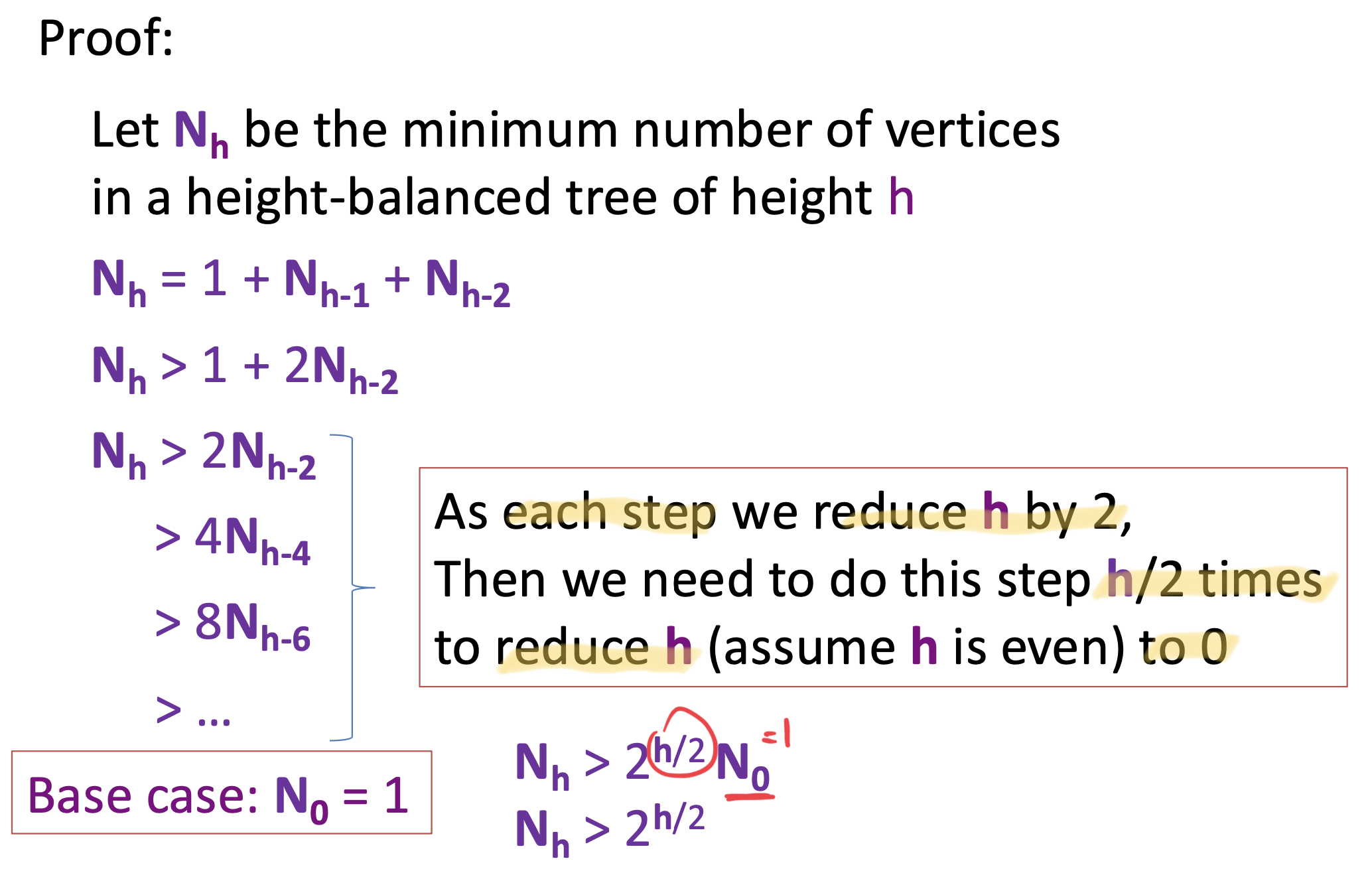
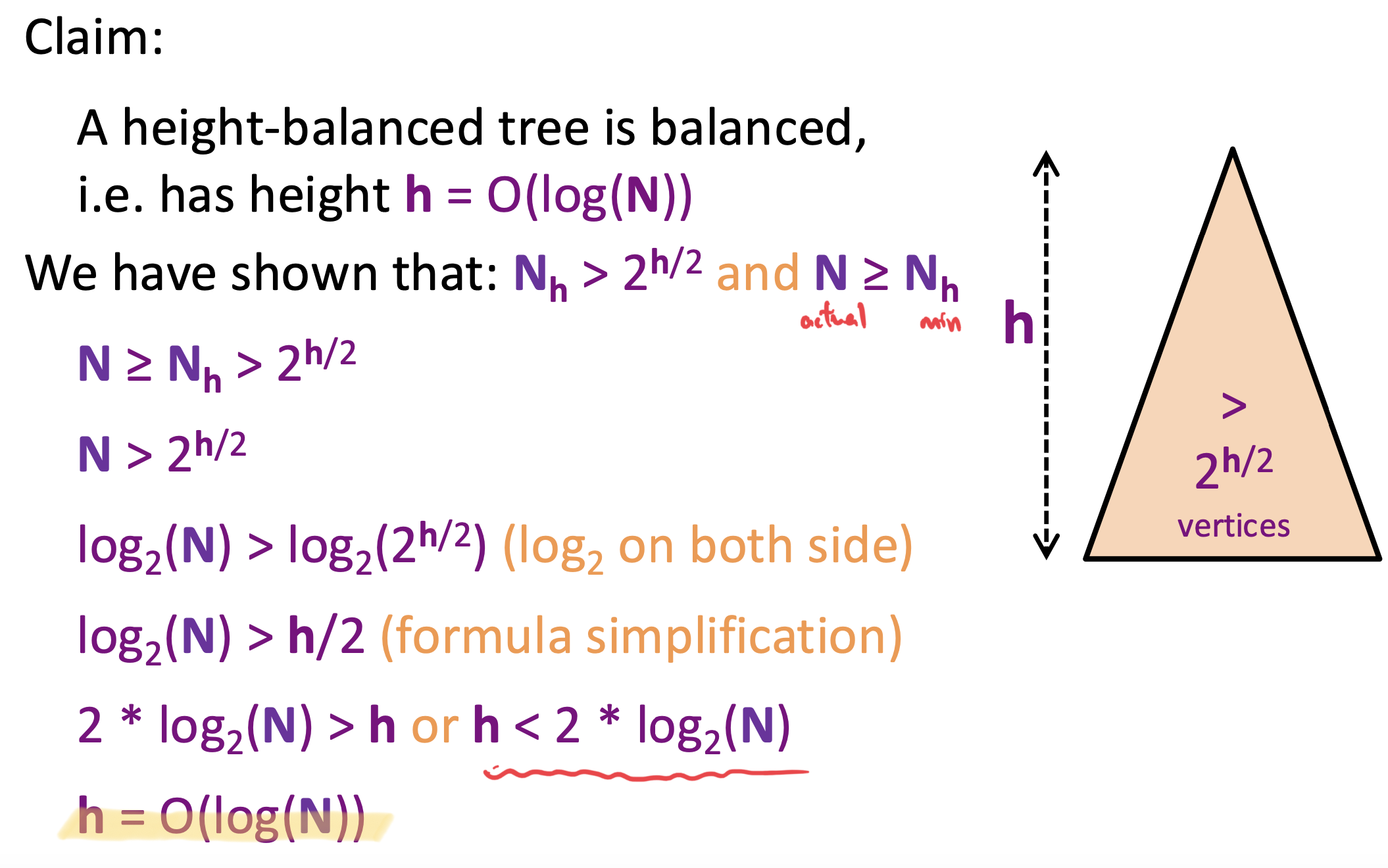
AVL Tree is a self-balancing extension of L10 BST. All BST operations apply, plus rotations to maintain h = O(log N).
Step 1: Augment
- in every vertex x, we also store its height: x.height
- during insertion and deletion, we also update height
- height update can be added in insert() before the return
- size can be updated the same
Step 2: Define Invariant
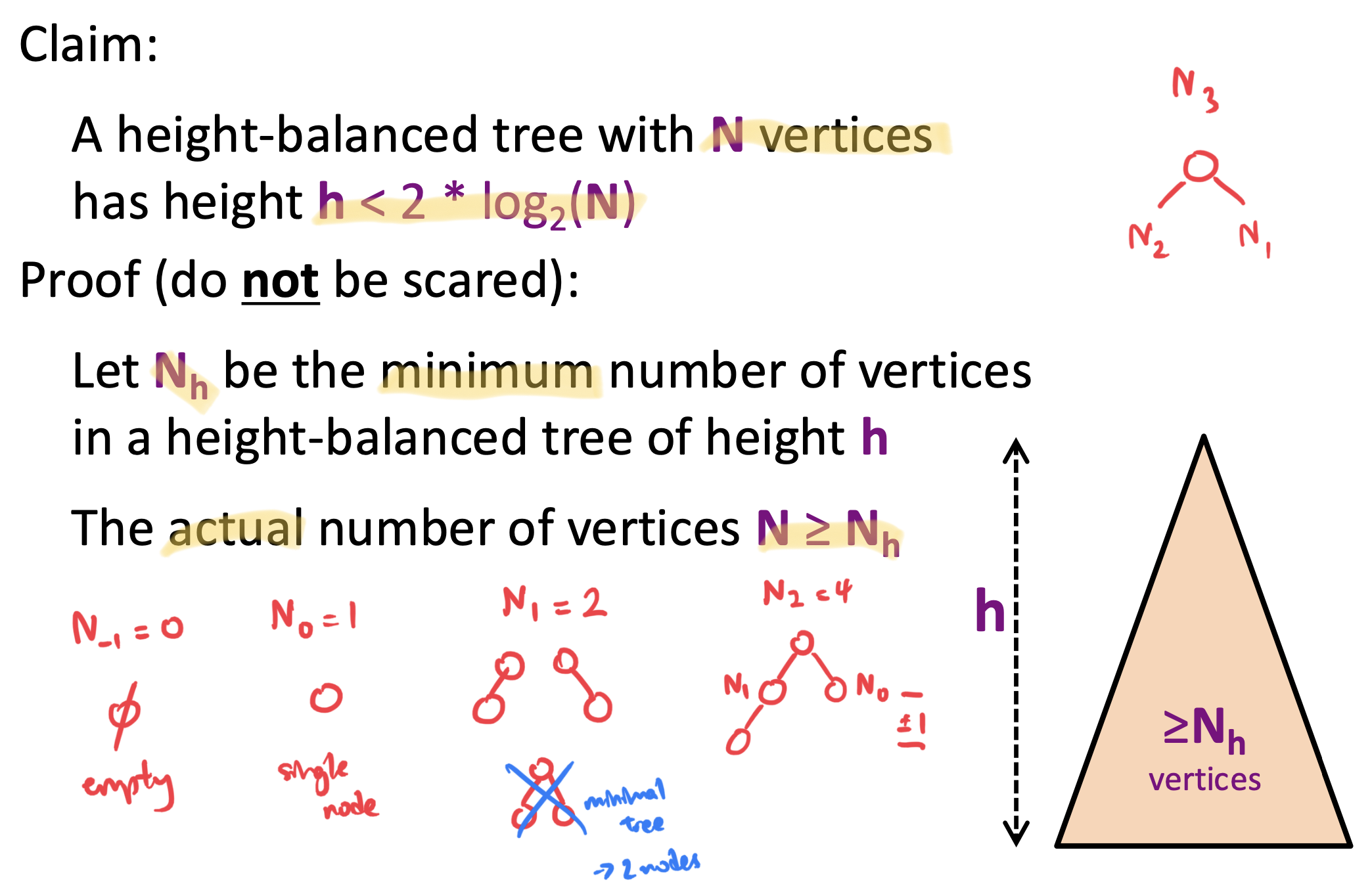
- a vertex x is said to be height-balanced if
- a BST is said to be height-balanced if every vertex in the tree is height-balanced
Step 3: Maintain Height-Balance
- bf(x) = x.left.height - x.right.height
- aft insertion, from insertion point, check bf of each vertex up to the root
- once we have vertex with bf +2 or -2, have to rebalance it
Tree Rotations
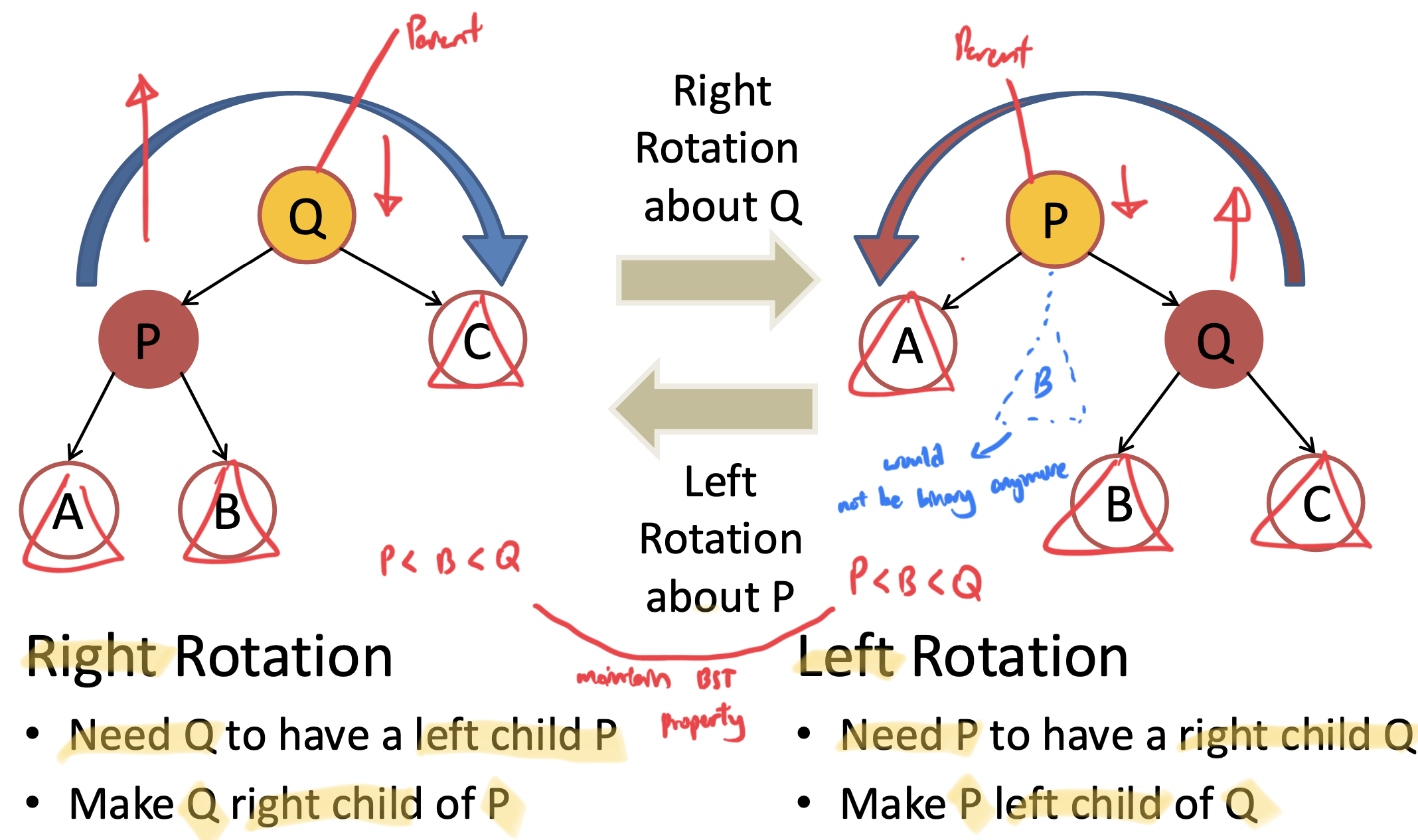

Vertex rotateLeft(Vertex T) {
        Vertex w = T.right;
        w.parent = T.parent;
        T.parent = w;
        T.right = w.left;
        if (w.left != null) {
            w.left.parent = T;
        }
        w.left = T;

        // update heights and sizes
        // update height of T then W
        w.size = T.size;
        updateHeight(T);
        updateSize(T);
        updateHeight(w);

        return w;
    }

    Vertex rotateRight(Vertex T) {
        Vertex w = T.left;
        w.parent = T.parent;
        T.parent = w;
        T.left = w.right;
        if (w.right != null) {
            w.right.parent = T;
        }
        w.right = T;

        // same from here
    }
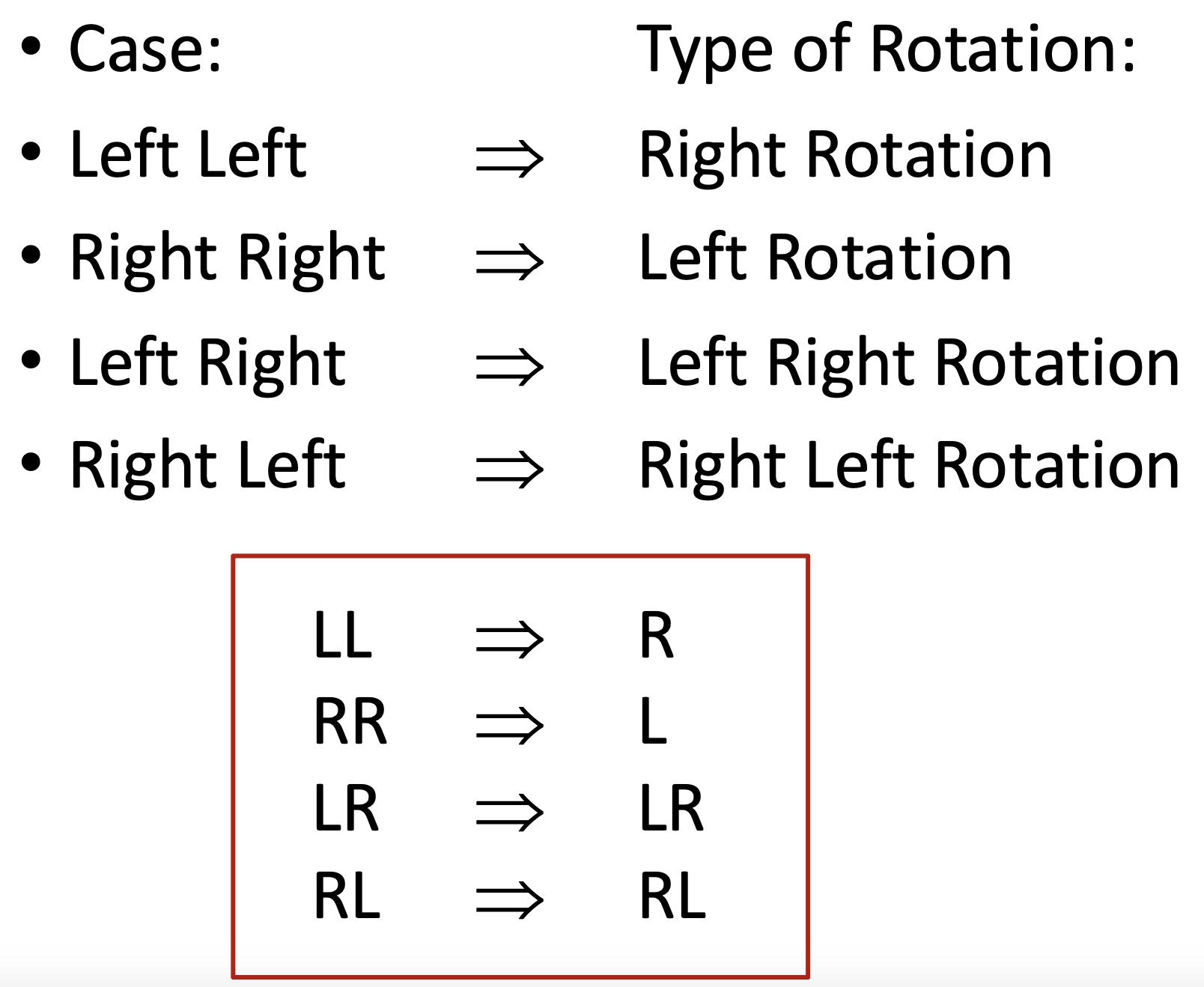
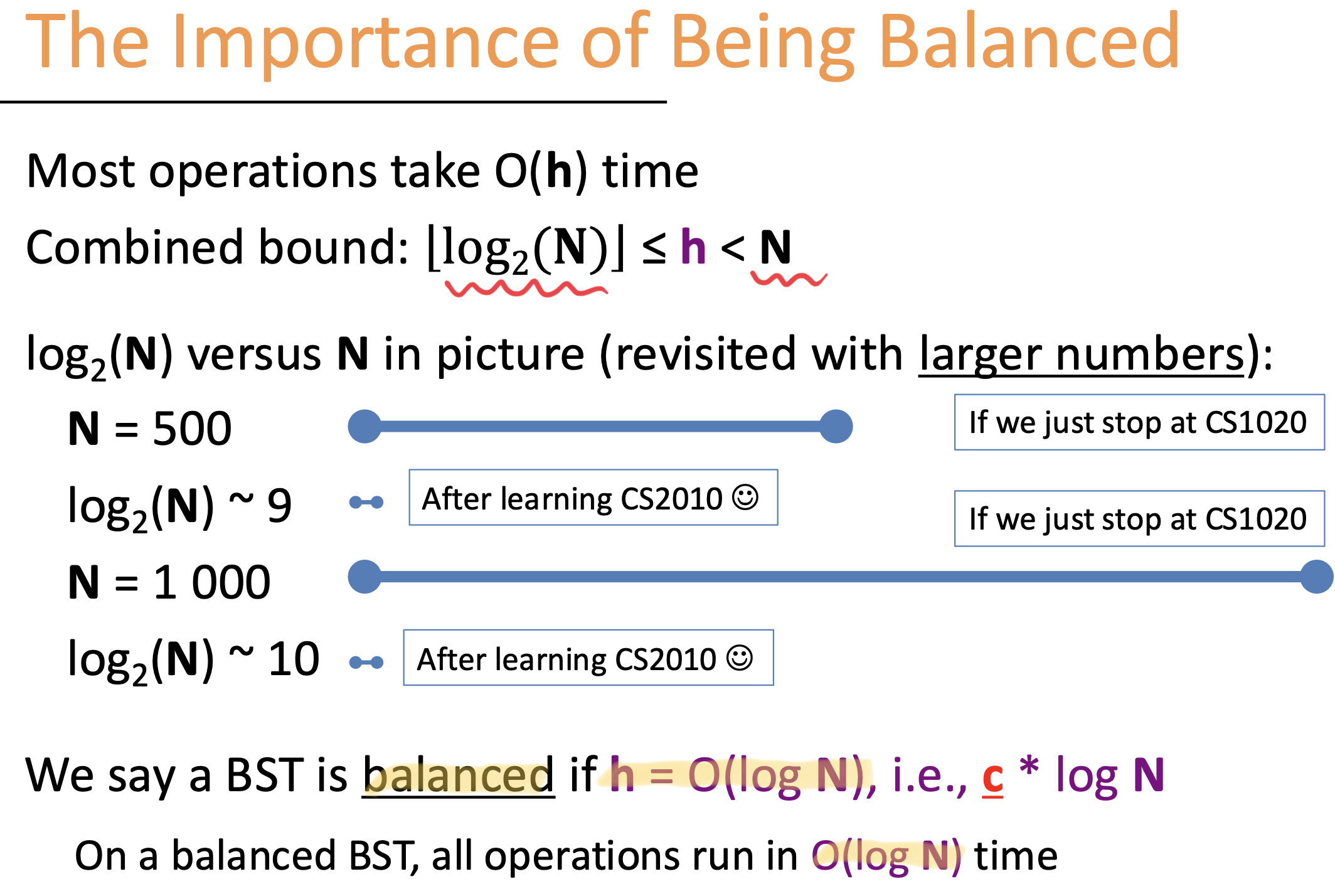
Insertion / Deletion
- insert / delete key as in normal BST
- walk up the AVL tree from the insertion / deletion point to root
- at every step, update height and check bf
- if vertex out of balance (+2 / -2), use rotations to rebalance
- Insertion: only trigger one of the four cases once
- Deletion: may trigger one of the four cases several times, up to h = log N times
// recursive function to insert a new key in the AVL tree
    Vertex insert(Vertex T, String v) {
        // normal BST insertion
        if (T == null) { // insertion point is found
            return new Vertex(v);
        }
        if (T.key.compareTo(v) < 0) {
            // search to the right
            T.right = insert(T.right, v);
            T.right.parent = T;
        } else if (T.key.compareTo(v) > 0) {
	        // search to the left
            T.left = insert(T.left, v);
            T.left.parent = T;
        } else { // duplicate
            return T;
        }

        // update height and size of node
        updateHeight(T);
        updateSize(T);

        // check balance factor and balance tree
        int bf = balanceFactor(T);

        // possible cases
        if (bf > 1) {
            // Left Right
            if (balanceFactor(T.left) < 0) {
                T.left = rotateLeft(T.left);
            }
            // Left Left
            T = rotateRight(T);
        }

        if (bf < -1) {
            // Right Left
            if (balanceFactor(T.right) > 0) {
                T.right = rotateRight(T.right);
            }
            // Right Right
            T = rotateLeft(T);
        }
        return T;
    }
-
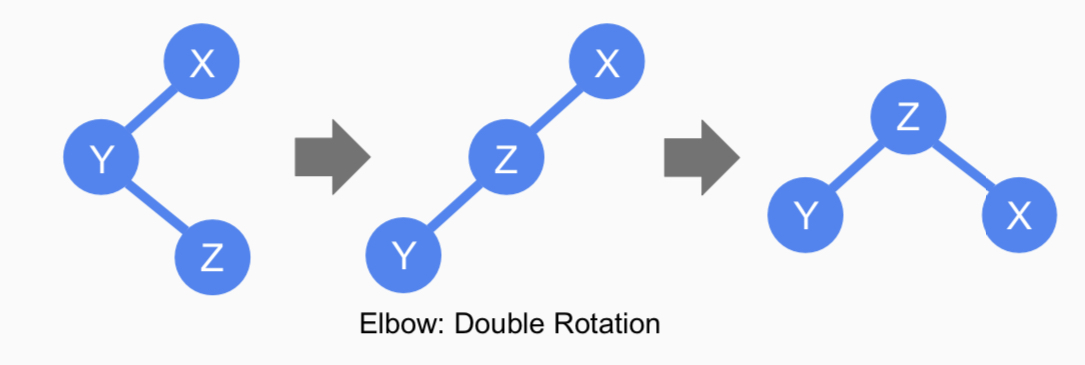
starting LR / LL
- bf(x) = -2, -1 ≤ bf(x.left) ≤ 0 (LL)
- rightRotate(x)
- bf(x) = +2, bf(x.left) = -1 (LR)
- leftRotate(x.left)
- rightRotate(x)
- bf(x) = -2, -1 ≤ bf(x.left) ≤ 0 (LL)
-
starting RL / RR
- bf(x) = -2, -1 ≤ bf(x.right) ≤ 0 (RR)
- leftRotate(x)
- bf(x) = +2, bf(x.right) = 1 (RL)
- rightRotate(x.right)
- leftRotate(x)
Rotation stuff: (AVL)
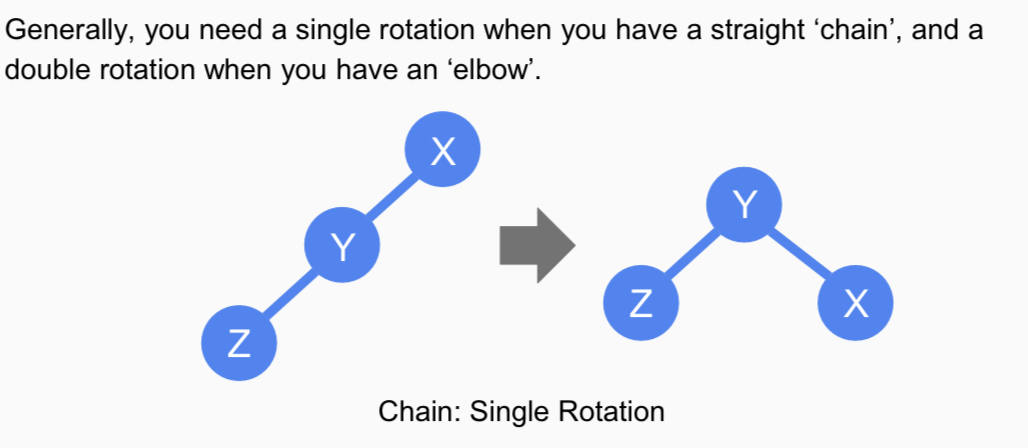
- bf(x) = -2, -1 ≤ bf(x.right) ≤ 0 (RR)