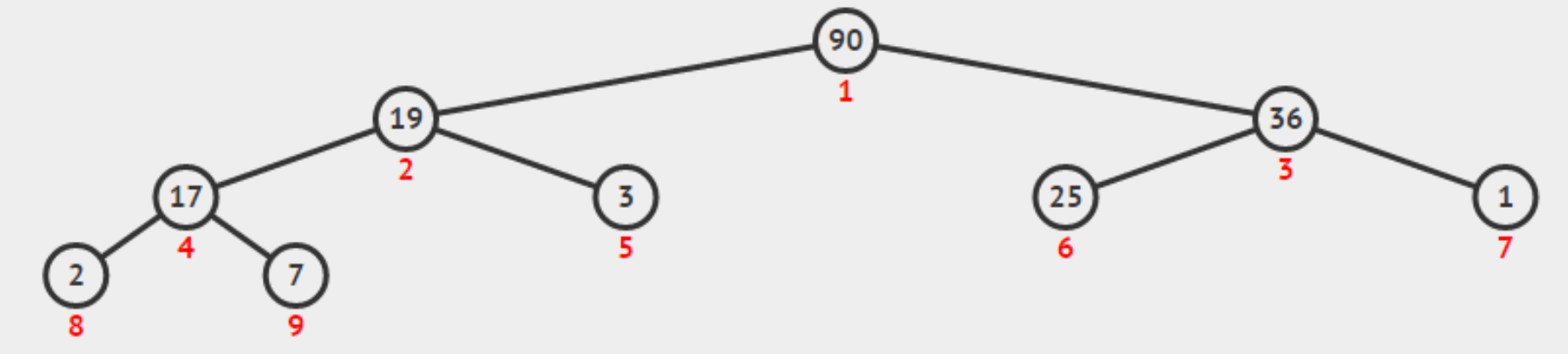
Complete Binary Tree
- every level, except possibly the last is completely filled, all nodes as far left as possible
- every level including last is filled → Perfect binary tree
- N items → height O(logN)
Insert(v)
	heapsize = heapsize + 1; // extend, O(1)
	A[heapsize] = v // insert at back, O(1)
	ShiftUp(heapsize) // fix the heap property, **O(log n)**

Shiftup(i) // **O(log n)**
	// while not root and violates max heap property
	while i > 1 and A[parent(i) < A[i]:
		swap(A[i], A[parent(i))
		i = parent(i)

ExtractMax()
	maxV = A[1]
	A[1] = A[heapsize] // replace root with last element
	heapsize -= 1
	ShiftDown(1) // **O(log n)**
	return maxV

ShiftDown(i) // or heapify
	while i <= heapsize: // **O(log n) (height)**
		maxV = A[i]; max_id = i;
		// check both directions, find larger
		if left(i) <= heapsize and maxV < A[left(i)]:
			maxV = A[left(i)]; max_id = left(i)
		if right(i) <= heapsize and maxV < A[right(i)]:
			maxV = A[right(i)]; max_id = right(i)
		if (max_id != i):
			swap(A[i], A[max_id])
			i = max_id;
		else:
			break

CreateHeap(arr) // **O(N) version**
	N = size(arr)
	A[0] = 0 // dummy entry
	for i = 1 to N:
		A[i] = arr[i-1] // copy content O(N)
	// from parent of last element to root
	for i = parent(N) down to 1: // O(N/2)
		ShiftDown(i) // O(log N), shiftdown all internal nodes
								 // including root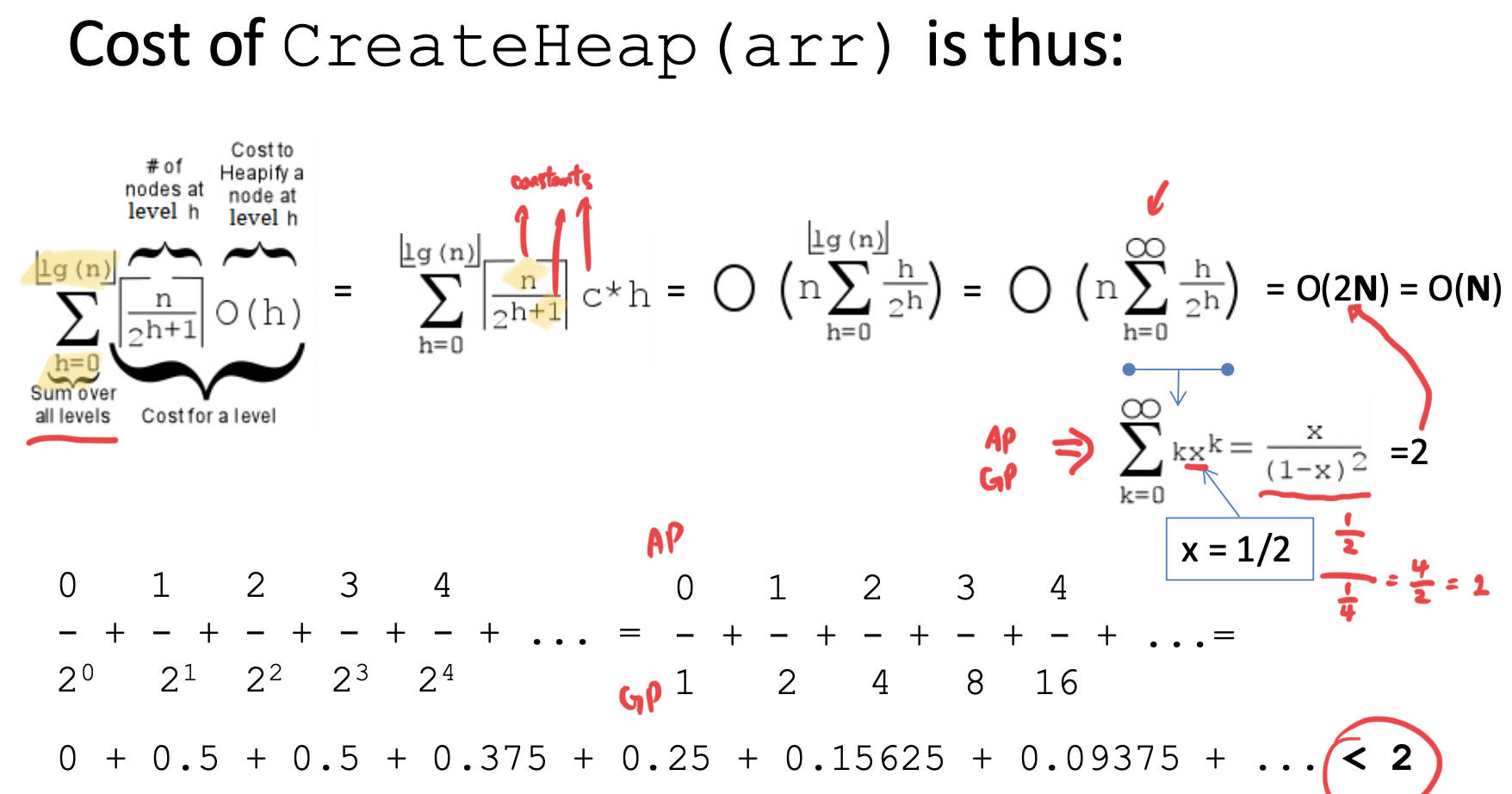
HeapSort(arr) // **O(NlogN)**
	CreateHeap(arr) // O(N)
	N = size(arr)
	for i from 1 to N: // O(N)
		A[N-i+1] = ExtractMax() // O(log N)
	return A
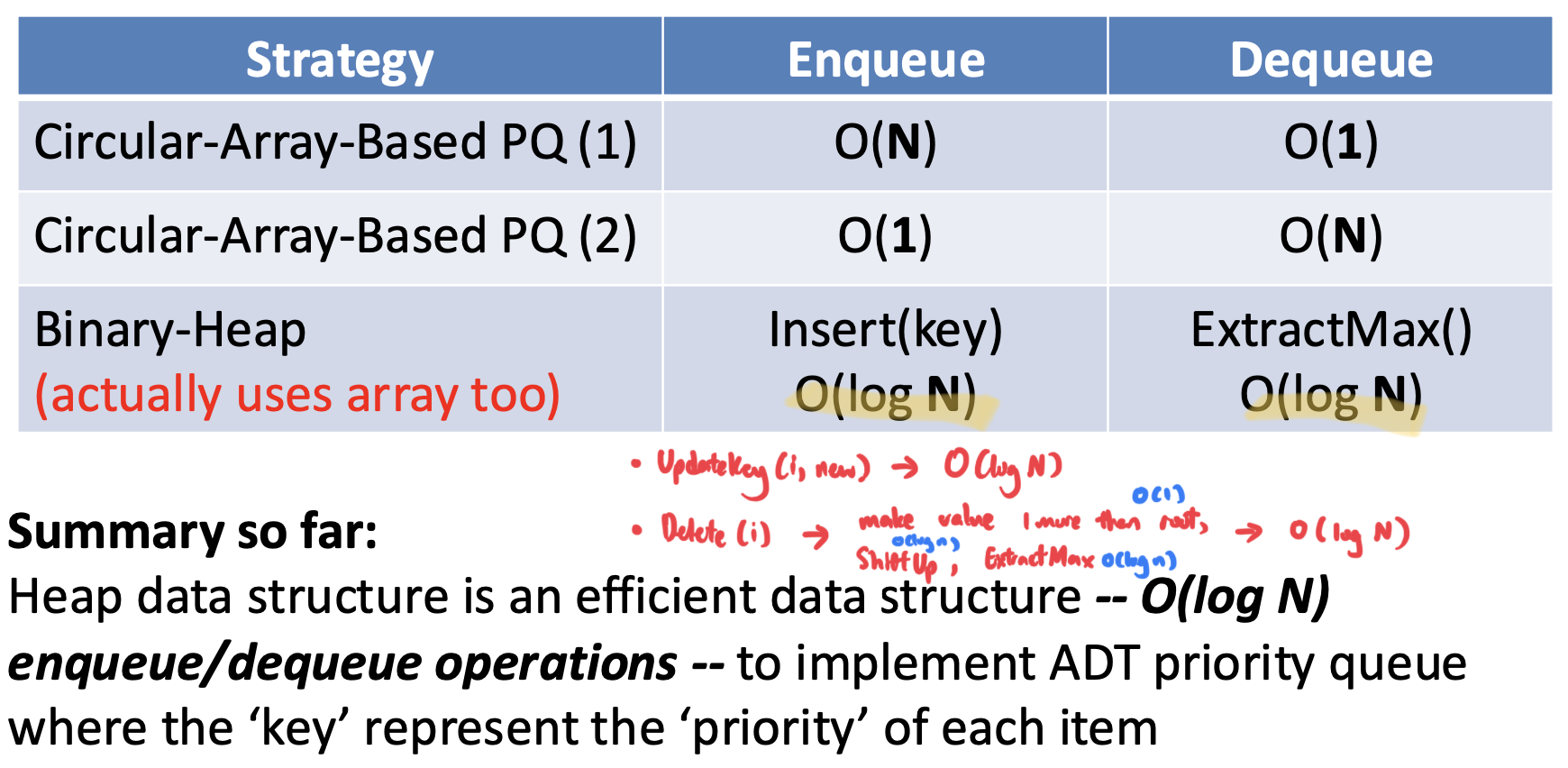
- UpdateKey(i, new) → O(log N)
- Delete(i) → make value 1 more than root (O(1)), ShiftUp (O(log n)), ExtractMax (O(log n)) → O(log N)
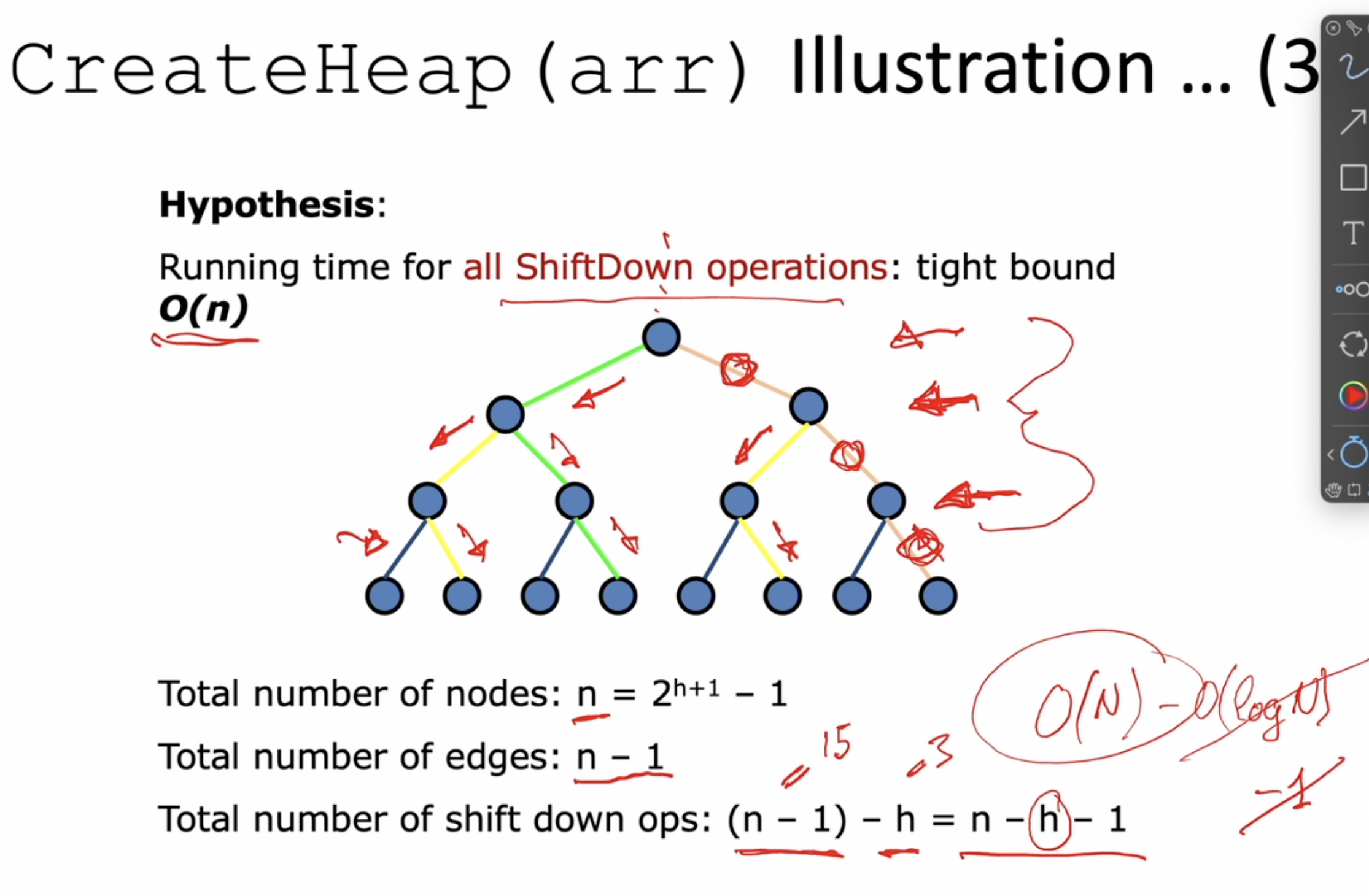
CreateHeap (O(N) Version)
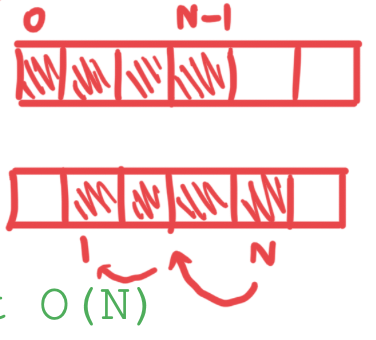
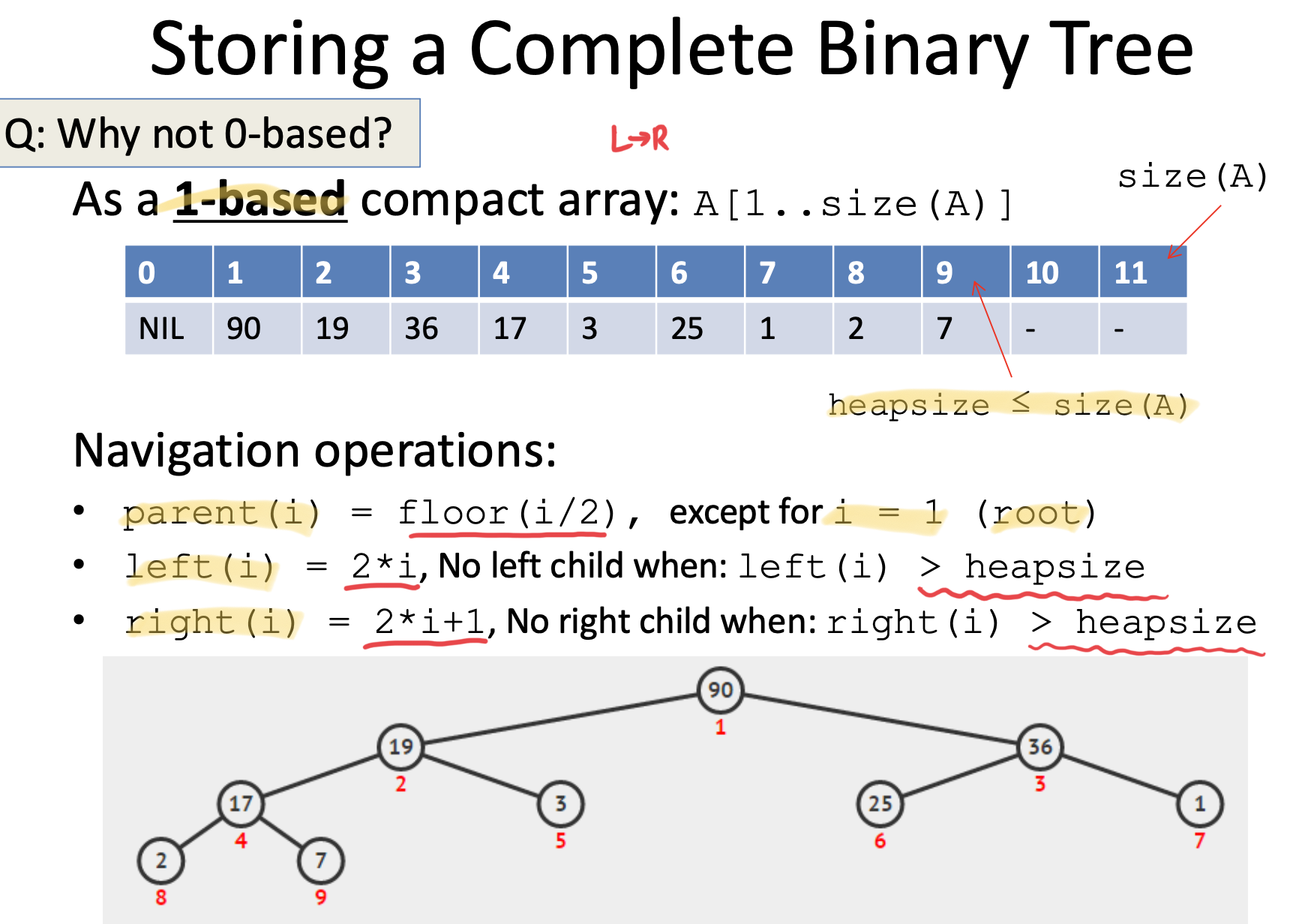
- parent(i) = floor(i/2) → somewhere in the middle
- NOT O(N log N) because this is not tight bound
- height floor(log N), cost to shiftdown(i): O(log N), no. of nodes at level h of perfect binary tree: ceiling(N / 2^h+1)
HeapSort (O(n log n))
- with a binary (max) heap, call ExtractMax() N times
- do not need extra array like merge sort, more memory friendly
- in-place sorting, but not cache friendly
- → see L4 Sorting for comparison with other O(n log n) algorithms (Merge Sort, Quick Sort)
Priority Queue (min-heap)
- Prim’s Algorithm → L14 MST (process lowest-weight edge first)
- Dijkstra’s Algorithm → L15-16 SSSP (process nearest unvisited vertex first)
- BST can also implement PQ but heap is simpler → L10 BST
extra: heap rank example